Cases
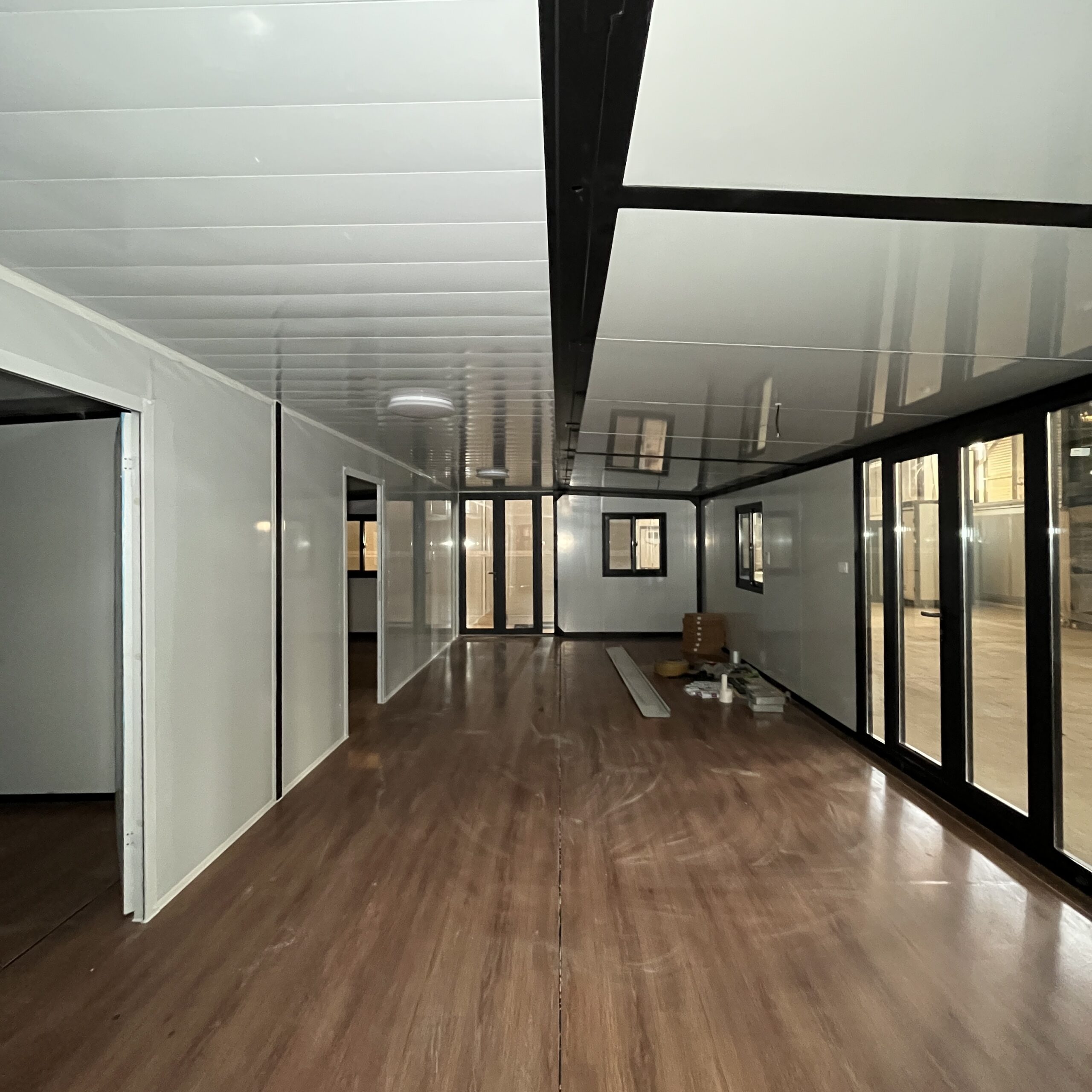
British homeowners have rediscovered an old idea with a modern twist: the most useful room you can add is the one at the bottom of the garden. A folding container house - a fully finished steel-framed module that folds flat for shipping and pops open on site - turns an empty lawn into a garden office, a studio, a gym or a guest annexe in days rather than the months a brick extension demands. This guide explains what a folding container house is, why its fold-flat form factor suits the UK market, and what to specify for year-round comfort in a damp, variable British climate.
American homeowners and small businesses have rediscovered a simple truth: the most valuable square footage you can add is the space already in your backyard. Prefab container houses — and their sleek Apple Cabin variant — turn an empty lawn into a rentable studio, a quiet home office, or a legal accessory dwelling unit (ADU) in a fraction of the time and cost of a conventional build. This guide explains how factory-built prefab units work, why they suit the U.S. market, and what to specify for four-season comfort.
Australia's mining, energy and infrastructure sectors run on people — and those people need safe, comfortable housing thousands of kilometres from the nearest town. Expandable container houses have become the go-to solution for workforce accommodation across Western Australia, Queensland and the NT because they unfold into spacious living units in hours, not weeks.


The United Arab Emirates is in the middle of one of the world's busiest construction cycles — energy megaprojects, logistics hubs, hospitality towers and the steady build-out of Dubai and Abu Dhabi. Every one of those sites runs on a migrant workforce that needs safe, dignified housing close to the job. In September 2026, Dubai Municipality reinforced exactly that expectation, mandating a minimum sleeping area of 3.7 m² per worker and 0.75–1.5 m² of outdoor and recreational space per person across workers' accommodation — part of a programme that classified 19 model camps as Silver, Gold or Platinum.

A detachable container house for worker camps in the UAE is built for this brief. The module ships flat-packed, bolts together on unprepared ground in a few hours, and arrives with the insulation, fire-rated panels and ventilation a Gulf summer demands — letting contractors stand up a compliant camp in weeks rather than the months traditional building would take.


South Africa supplies more than 70% of the world's platinum, almost all of it dug out of the Bushveld Igneous Complex across Limpopo, North West and Mpumalanga provinces. The mines sit on the highveld plateau at 1,400–1,700 metres, often 180 km or more from the nearest town, and their workforces keep growing as PGM demand rises across automotive catalysts and hydrogen technology. Housing those workers well is no longer a nice-to-have: the South African Mining Charter ties operating licences to worker welfare, and operators from Anglo American Platinum to Sibanye-Stillwater are replacing aging multi-occupancy hostels with modern, dignified camp accommodation.

A detachable container house for mining camps in South Africa is the fastest way to close that gap. The module ships as a flat frame with detachable roof and wall panels, bolts together on unprepared ground in a few hours, and delivers a fully insulated, wired and plumbed room that survives 35°C summers and -5°C winters — at a fraction of the cost and timeline of brick construction, which routinely takes 12–18 months on remote sites.
Expandable Container House for Living in Australia – Granny Flats, Backyard Studios & Modular Homes


Australia is short of homes, and the backyard is where many families are finding the answer. Under the National Housing Accord, the country is targeting 1.2 million new well-located homes between July 2024 and June 2029, while builders surveyed by the Housing Industry Association expect to construct ten times more granny flats in 2026 than in 2022. Rental vacancy rates have fallen to 15-year lows in several markets, and state governments from Queensland to South Australia have opened secondary dwellings to the open rental market.

An expandable container house for living in Australia is one of the fastest ways to capture that opportunity. The unit ships folded inside a standard 40 ft container, then unfolds on site into a fully insulated 28–74 m² home with bedrooms, kitchen, bathroom and Australian-standard wiring — at a fully installed cost of roughly AUD 60,000–120,000, well below the AUD 140,000–250,000 typical for a site-built two-bedroom granny flat in NSW.
Folding Container House for Backyard in the USA – Affordable ADU, Guest House & Rental Unit


The American backyard is becoming valuable real estate. With the US accessory dwelling unit (ADU) market estimated at USD 8.5 billion in 2024 and projected to reach USD 14.5 billion by 2033, homeowners across California, Texas, Florida, Washington and Oregon are adding rentable guest houses, home offices and multigenerational suites behind their primary residences. A folding container house for backyard in the USA is one of the fastest, most cost-effective ways to join this movement.

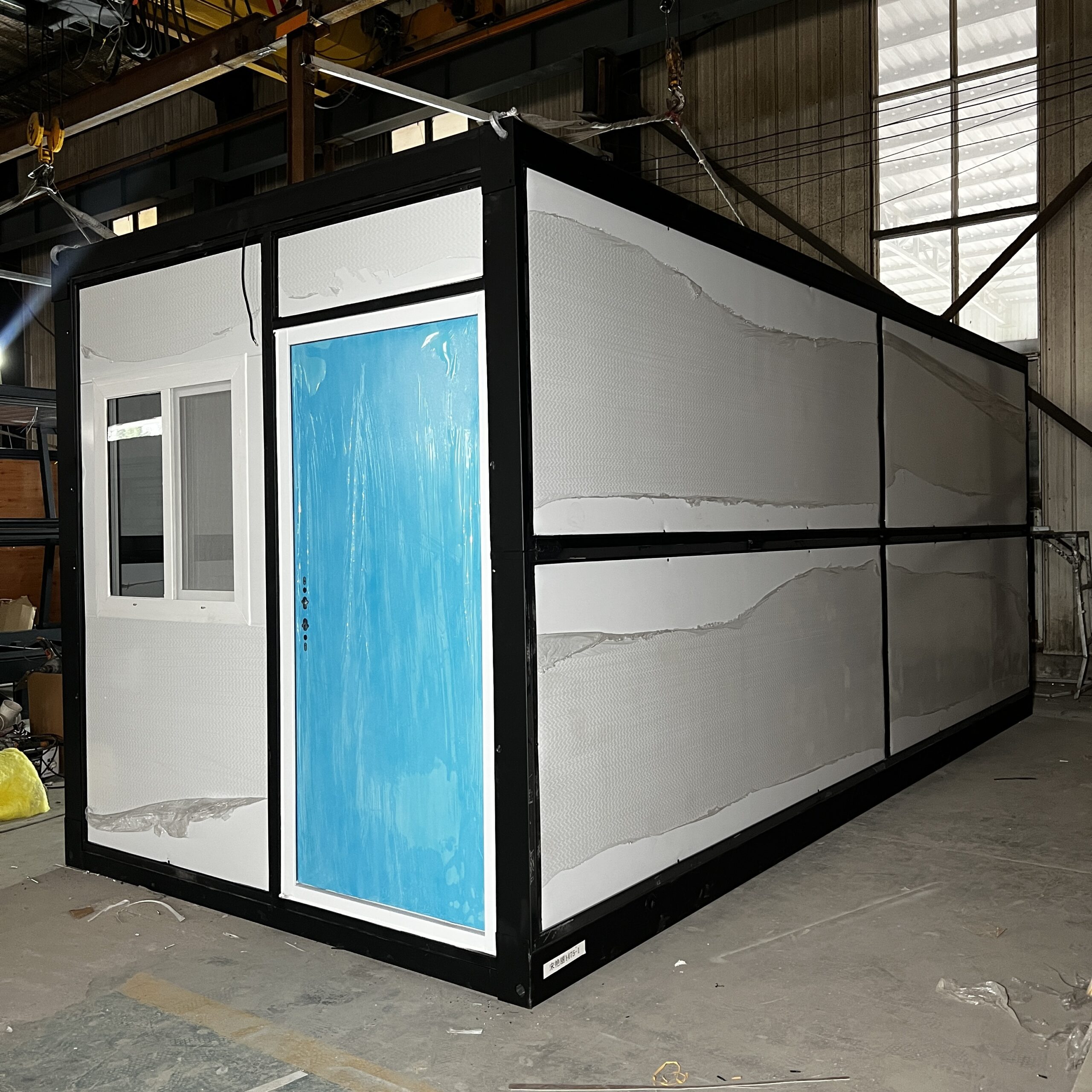
Unlike site-built ADUs that can take 12–18 months and cost USD 100,000–300,000, a MODU HOUSE folding container house arrives as a flat-packed module, unfolds on a simple gravel or concrete pad, and connects to standard utilities in a matter of days. The PQT-1475H model measures just 5,900 × 2,480 × 2,540 mm when delivered, yet opens into a complete studio with insulated walls, US-standard electrics, PVC sliding windows and a finished floor.

Nigeria is Africa’s largest oil producer and one of the continent’s busiest construction markets. Mega-projects such as the Dangote Refinery — with on-site accommodation for up to 40,000 workers — and the Nigeria LNG worker camp, which deployed 4,392 modular units across 81,014 m², show the scale of workforce housing required by the country’s energy and infrastructure sectors. These camps are not temporary sheds; they are fully serviced villages that must be delivered fast, withstand tropical rainforest conditions, and meet strict QHSE standards.

The Double Wing Container House by MODU HOUSE is engineered for exactly this challenge. A 40 ft unit folds down to a standard shipping-container footprint for transport, then expands on site to roughly 74 m² of usable floor area in about two hours. With hot-dip galvanised steel frames, insulated sandwich-panel envelopes, pre-installed electrics and customisable layouts, it gives Nigerian EPC contractors, oil-field services companies and infrastructure developers a relocatable camp building that is ready to occupy within days of arrival.
Apple Cabin House for Resort in Saudi Arabia – Luxury Prefab Pods for Eco-Tourism & Desert Hospitality


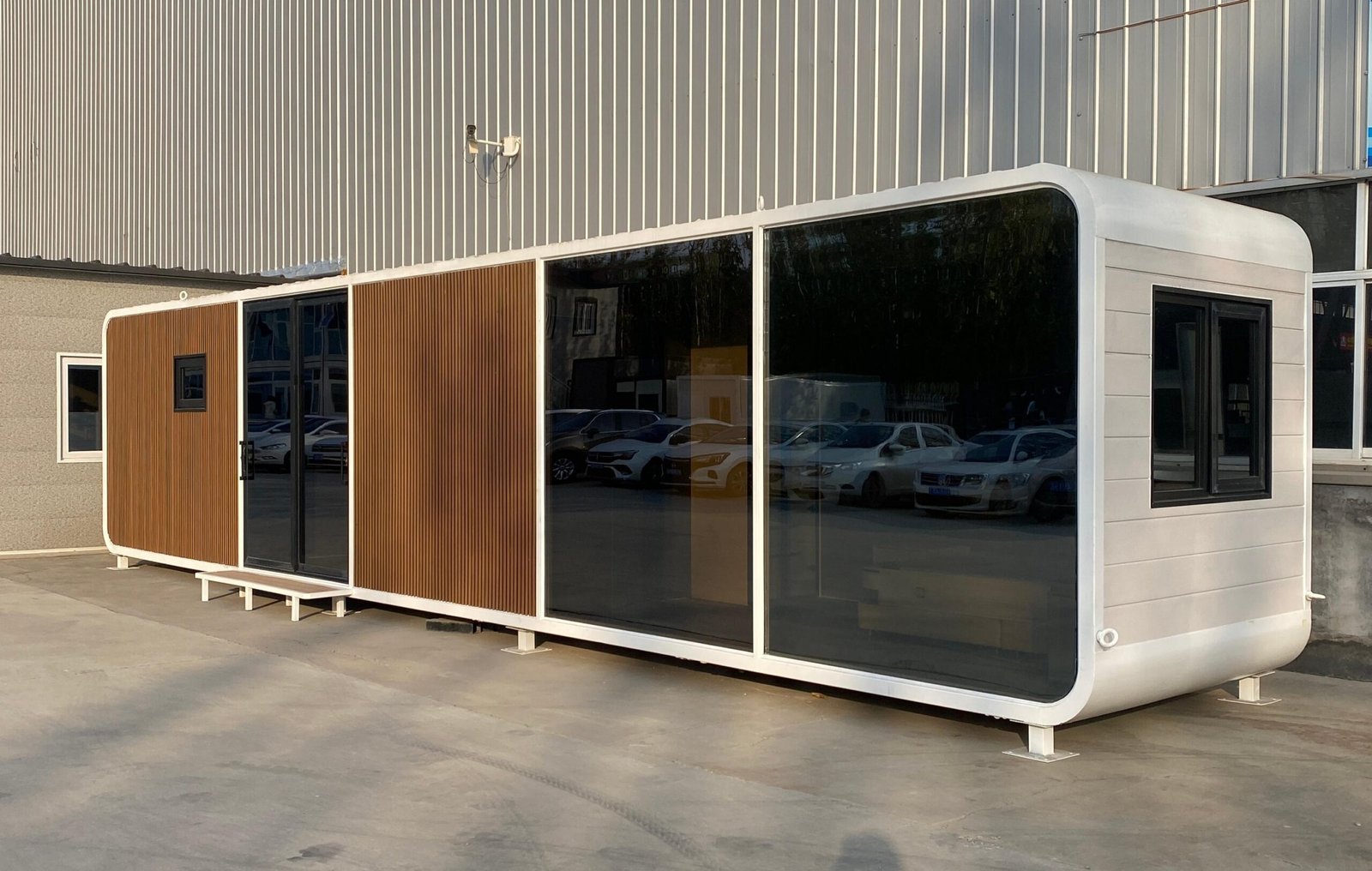
Apple cabin houses are becoming the signature accommodation format for Saudi Arabia’s next generation of eco-resorts and desert retreats. Under Saudi Vision 2030, the Kingdom is targeting 150 million annual visitors by 2030 and hospitality investment is projected to push the sector toward USD 116.73 billion by 2034. Within that expansion, the Saudi glamping market alone is forecast to grow from roughly USD 64 million in 2026 to USD 170 million by 2033, driven by demand for nature-immersive, design-led stays at destinations such as AlUla, the Red Sea Project, NEOM and the Empty Quarter. MODU HOUSE’s Apple Cabin answers that demand with a 20 ft boutique pod or 40 ft expandable villa built around a curved steel shell, floor-to-ceiling thermal glazing, high-performance PU insulation and a fully fitted interior that ships flat-packed and deploys in days rather than months.

Unlike canvas tents or lightweight cabanas, an Apple Cabin is a permanent modular building with a 25+ year service life. The galvanised Q235 steel frame, 40 mm PU spray-foam core, double-glazed tempered curtain wall and Saudi-customisable electrics deliver year-round comfort in desert heat, coastal humidity and mountain cool. For resort developers, that means faster revenue, lower capital commitment, and an instantly Instagrammable asset that commands premium nightly rates in Riyadh, Jeddah, AlUla and the Red Sea coastline.


Double wing container houses are rewriting how Australian glamping operators build luxury outdoor accommodation. Australia's glamping market reached USD 193.6 million in 2025 (Grand View Research) and is forecast to grow to USD 320.2 million by 2033 at a CAGR of 5.8%, driven by domestic short-break travel, premium experiential stays, and demand for nature-immersive cabins with hotel-grade comfort. Designed with two lateral wings that swing outward from a central core, a 40 ft bi-wing expandable container home expands from a 2.4 m-wide ISO transport unit to a 72 m² turn-key villa in around 4 hours. Pre-wired with Australian Standard 220V electrics, fitted with double-glazed thermal-break aluminum windows, and optioned with an integrated U-shaped pavilion of teak composite decking, a double wing container house delivers the privacy, weather protection, and aesthetics that today's glamping guests will pay AUD 350–700+ per night for. MODU HOUSE's 20 ft, 30 ft, and 40 ft bi-wing containers ship flat-packed in a single 40HQ, deploy on remote outback, coastal, and wine-region sites, and qualify for the modular accommodation codes most Australian state tourism plans now recognise.
A container granny annexe is the fastest route to genuinely independent accommodation in a UK back garden — and the one project where the planning route matters more than the product. England's average house price reached roughly GBP 293,000 in mid-2026, purpose-built brick-and-block annexes run from GBP 80,000 to over GBP 160,000, and a fully finished container annexe lands at a fraction of that with a build programme measured in weeks rather than a building season. But the planning position is misunderstood by almost every buyer, and getting it wrong means an enforcement notice against a building your parent is already living in.

MODU HOUSE is a China-based prefab container house manufacturer with more than two decades of export experience and deliveries to over 80 countries. In this guide we set out the three things that actually decide a UK annexe project: the planning route (and the statutory "caravan" test that can simplify it), the Building Regulations package including Approved Documents A, B, E, F, G and L, and the true landed cost once 20% VAT has been modelled in. We also show exactly which specification questions separate a year-round annexe from a summer garden room.
Expandable container house Canada buyers are turning to factory-built modular homes as the fastest, most affordable answer to the country's housing crisis. With the national average home price sitting near CAD 716,000 and Toronto and Vancouver well above CAD 1.1 million, a fully finished expandable container home landed for CAD 55,000-75,000 offers savings of 65-75% over conventional construction — and it arrives in 6-8 weeks instead of 8-18 months. Municipalities from Vancouver to Toronto are actively encouraging accessory dwelling units (ADUs) and laneway houses, and federal programs such as Build Canada Homes are backing modular supply with billions in loan support.


MODU HOUSE is a China-based prefab container house manufacturer with more than two decades of export experience and deliveries to over 80 countries, including hundreds of units across Canada. Our expandable container houses are engineered from the frame up for Canadian conditions: cold-climate insulation packages rated to -40 C, snow-load-rated roofs, and compliance engineering to the National Building Code of Canada. In this guide we break down why expandable homes fit the Canadian market, what winterization actually means, the real landed cost, and how to bring a unit to your site quickly.
Our main products including Expandable Container House, Folding Container House, Detachable Container House and etc. All of our products have CE certification. Most of configurations of our houses can be customized according to customers special needs and meet different countries standards.
Contact Us
Contact person: MODU HOUSE
Mobile/WhatsApp: +86 131 7639 4131
Email:info@mymoduhouse.com
Add: Building 3, No. 9 Nanliu Road, Liuting Subdistrict, Chengyang District, Qingdao City, Shandong Province
Copyright © 2026 MODU HOUSE

Contact Us

Leave Your Inquiry, We Will Provide You With Quality Products And Services!

Contact us