Table of Contents

20+ Years Professional Custom Container House Manufacturer
Detachable Container House for Worker Camps in the UAE – Modular Labour Accommodation for Gulf Construction & Energy Projects
2026-10-31
Why the UAE Relies on Modular Worker Camps in 2026
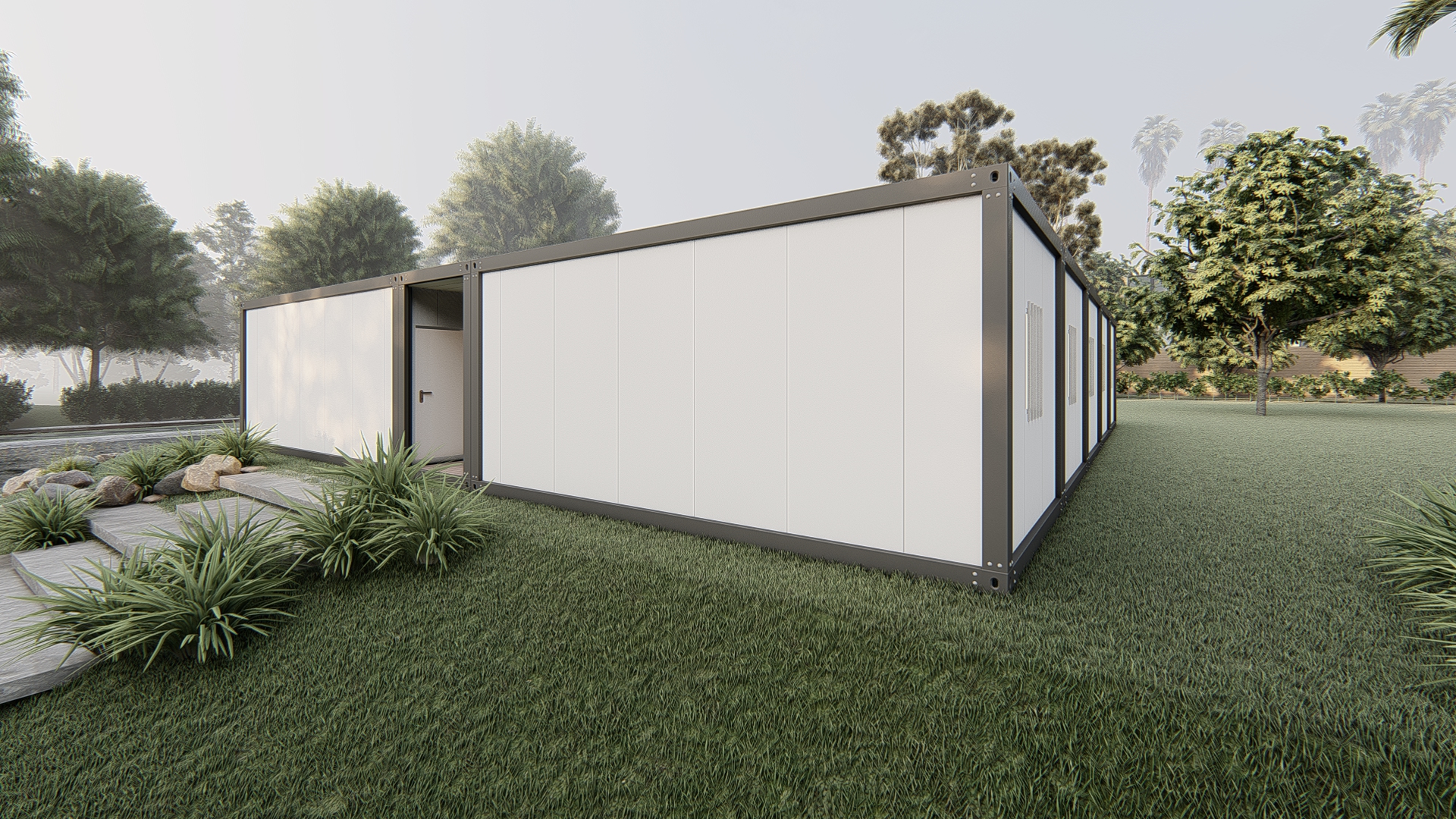
Three forces keep modular worker accommodation at the centre of Gulf project delivery.
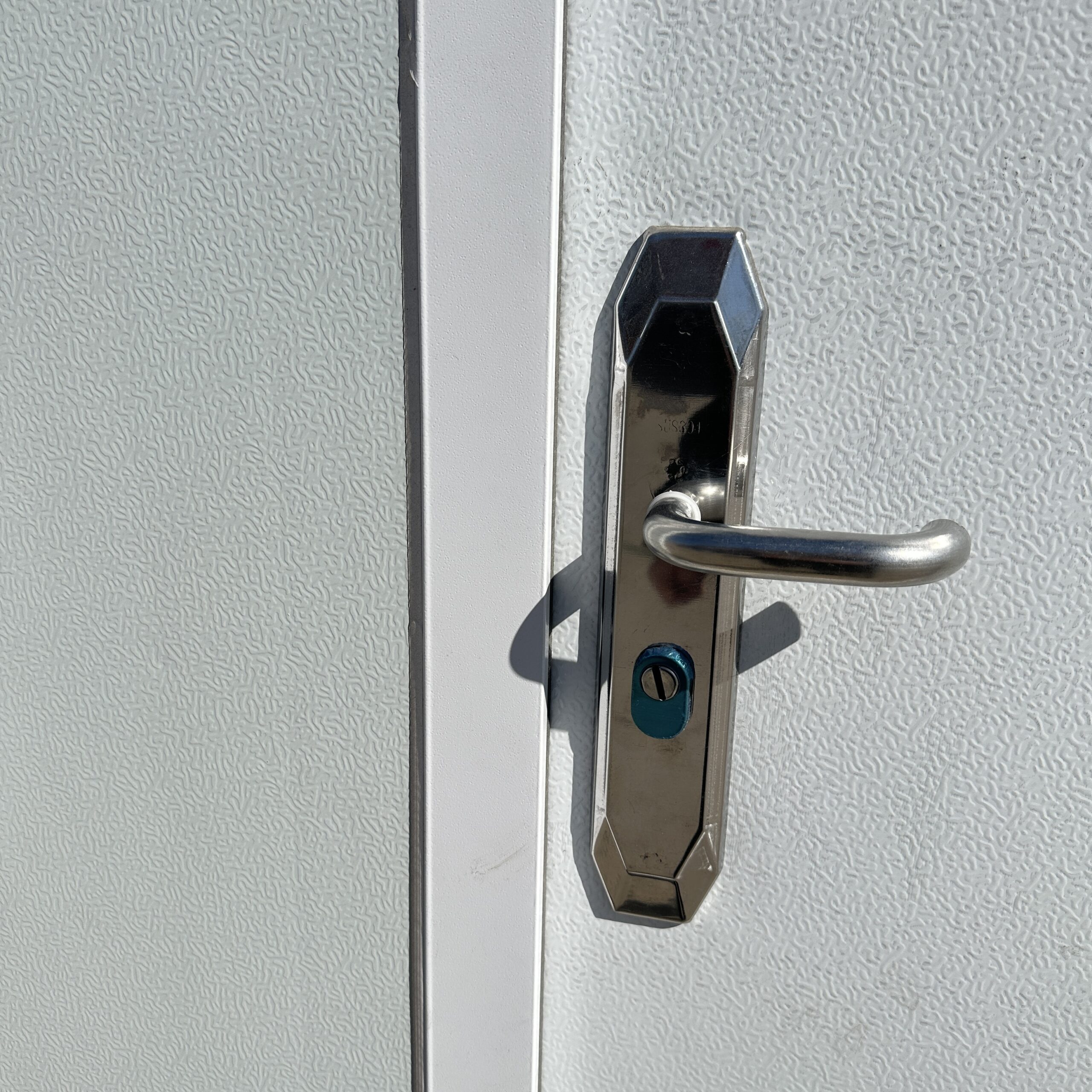
First, regulation. Dubai's 2026 accommodation standards are explicit: 3.7 m² of sleeping space per worker, dedicated outdoor and recreation area, and graded model-camp classification that ties liveability to recognition. Abu Dhabi and the federal system impose their own worker-welfare and civil-defence requirements. Camps that cannot demonstrate compliance stall — and modular suppliers arrive with the drawings and certificates the authorities expect.
Second, climate. Summers in the UAE reach 50°C air temperature with surface temperatures around 70°C, coastal humidity is high, and shamal winds drive abrasive sand across sites for days at a time. Traditional concrete construction stretches curing cycles and exposes crews to heat; factory-built modules are finished in controlled conditions and simply assembled, keeping programmes on schedule through the worst months.
Third, project volatility. Energy and infrastructure programmes scale headcount sharply during peak build and wind down just as fast. A Chinese supplier's UAE oilfield camp referenced in trade press spanned 4,000 m² using a mix of flat-pack and detachable modules, with the kitchen built to a 1.5-hour fire rating; another contractor delivered 30 oil-worker dormitories in 200 days using prefabricated steel modules. Detachable units go further — every module unbolts and relocates when the project shifts.
What Is a Detachable Container House?
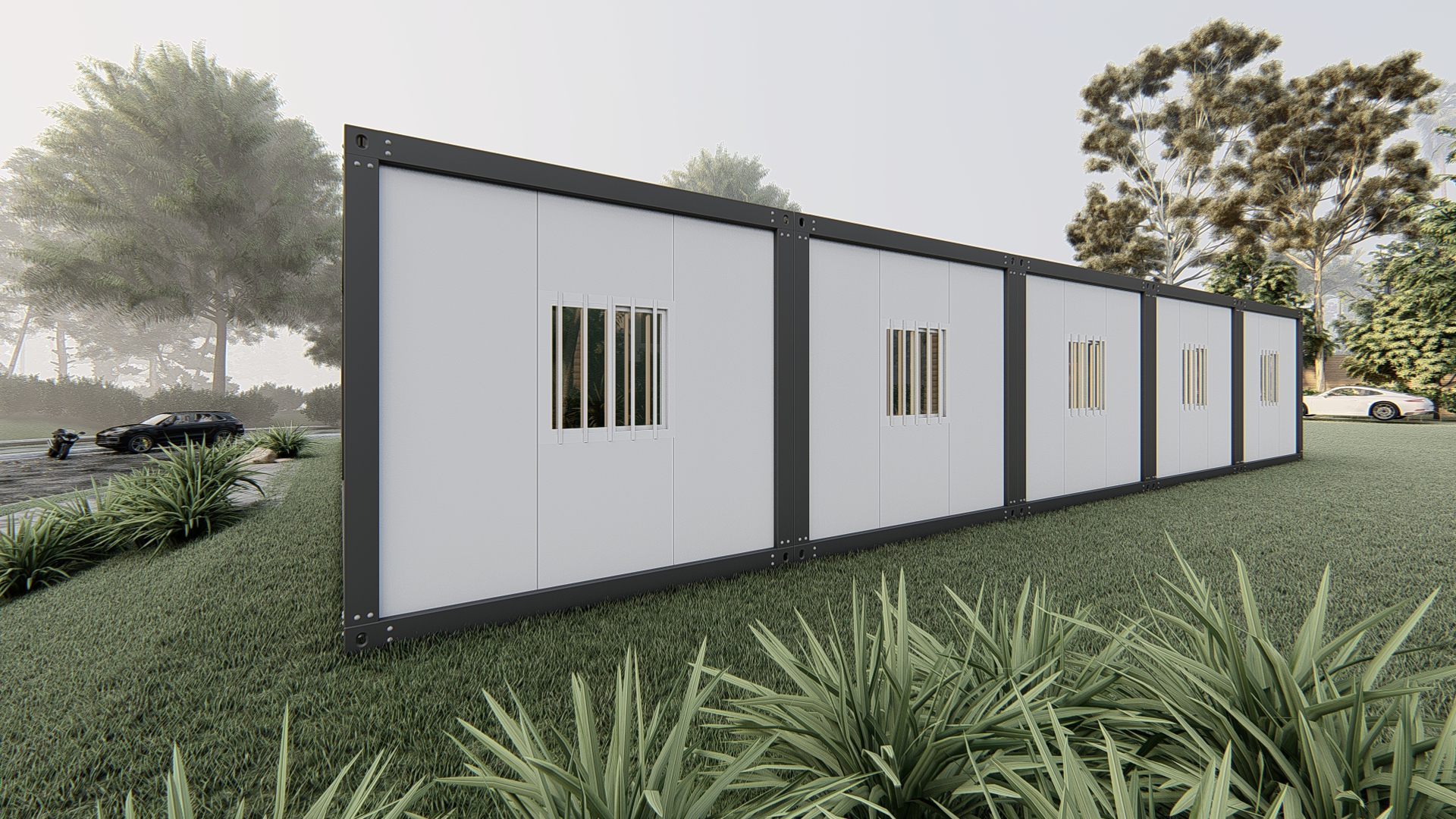
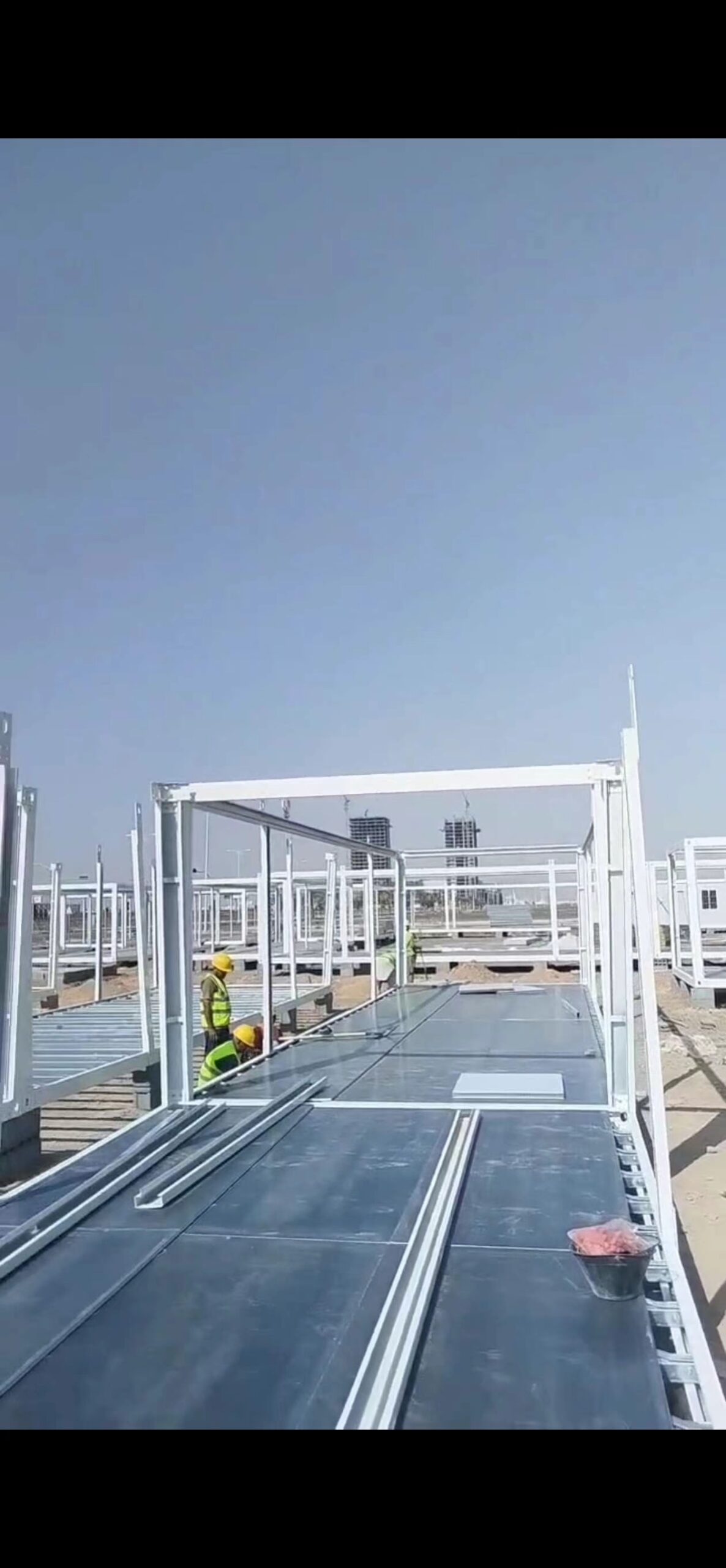
A detachable container house — also called a knock-down or demountable container unit — is a galvanised steel module supplied as a base frame, roof frame and packed wall, ceiling and floor panels. Unlike a welded shipping-container conversion, it is assembled at destination:
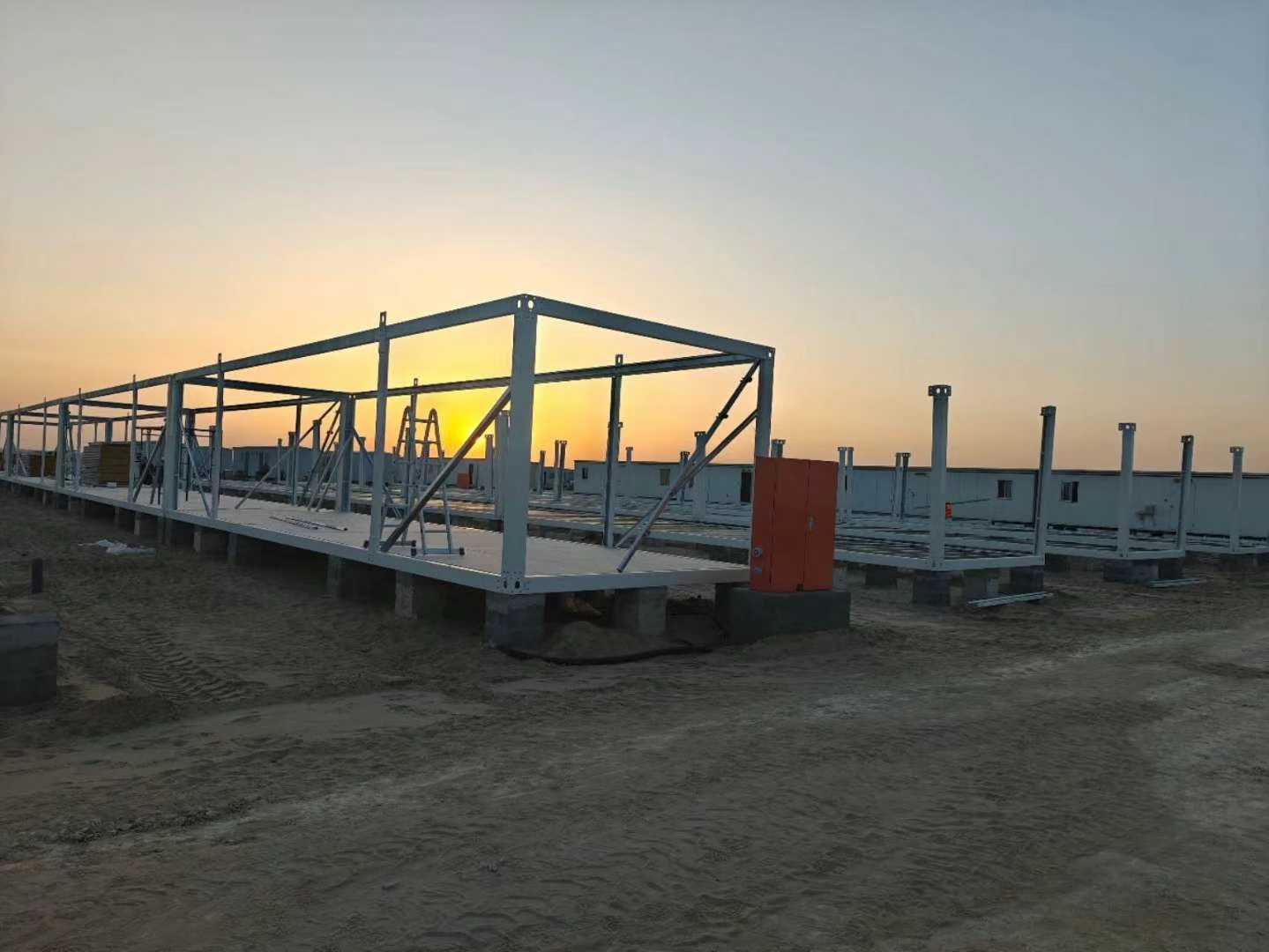
- Base frame — galvanised steel channel with forklift pockets and lifting lugs, levelled on concrete blocks, sand pads or adjustable feet; no raft slab required.
- Panels — 50–100 mm sandwich panels (EPS, PIR or rock wool) slot into the frame and are fixed with bolts; a 3–4 person crew closes a standard 20 ft room module in roughly 2–4 hours.
- Services — pre-installed wiring loom, distribution board, lighting and sockets; optional en-suite pod with WC, shower and basin on a single connection point.
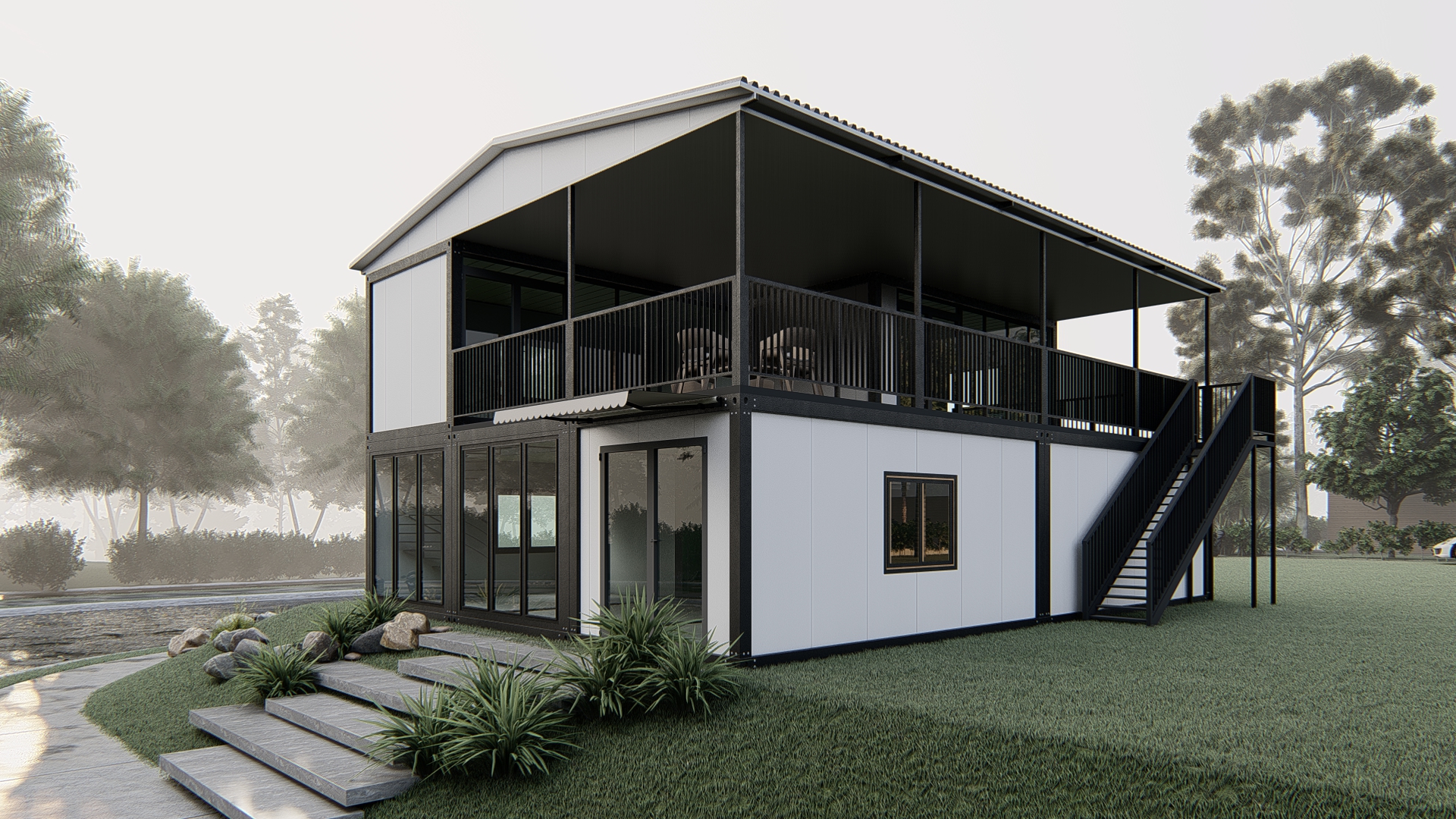
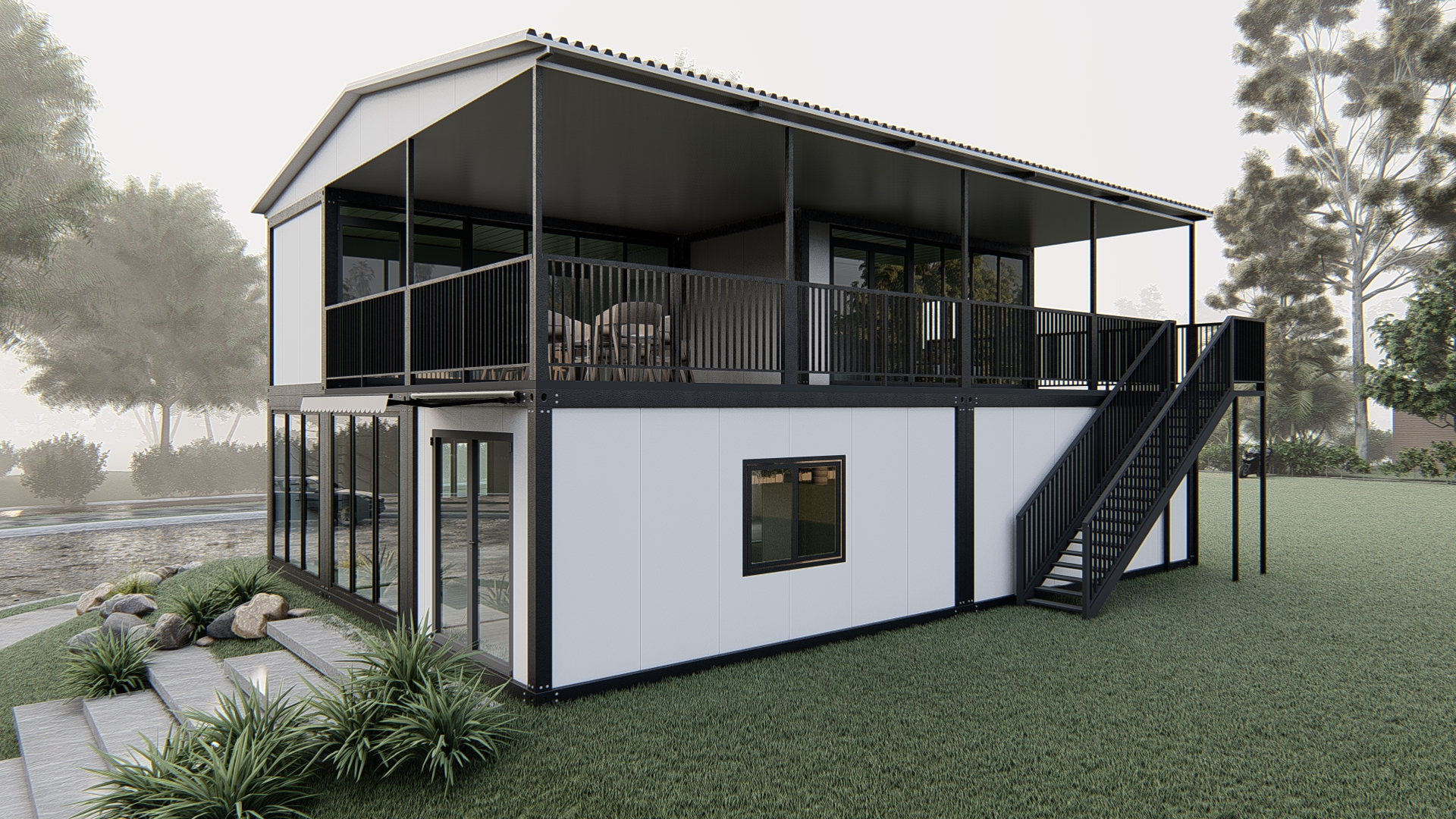
- Stacking — corner fittings allow stacking up to three storeys, so a 200-bed camp fits a compact footprint.
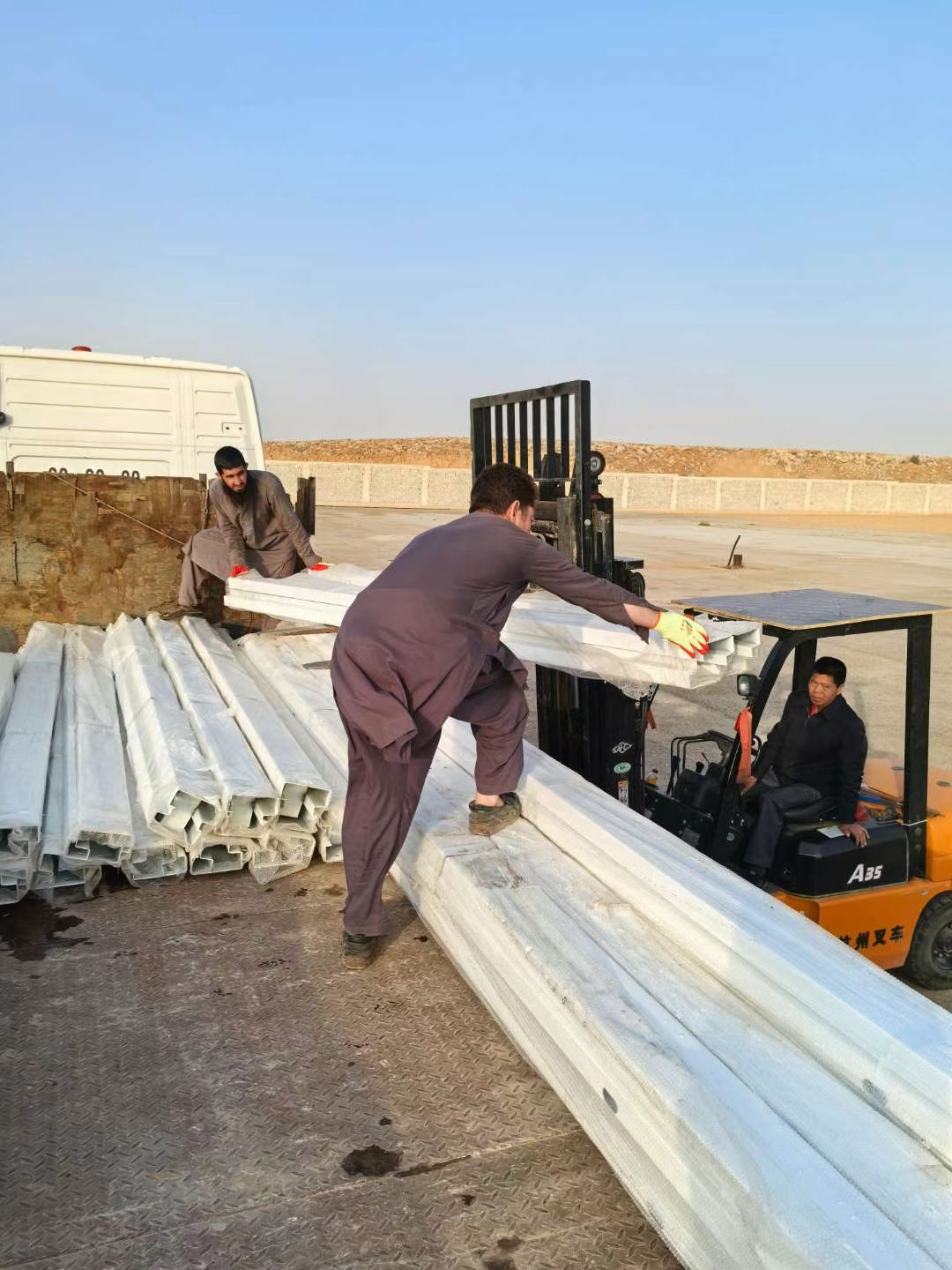
Because the panels detach, the building flat-packs for freight: a 40 ft high-cube container carries 6–8 disassembled 20 ft room modules, cutting sea-freight cost per bed dramatically versus shipping completed units — the decisive factor for imports through Jebel Ali.
MODU HOUSE Detachable Container House: Typical Specifications
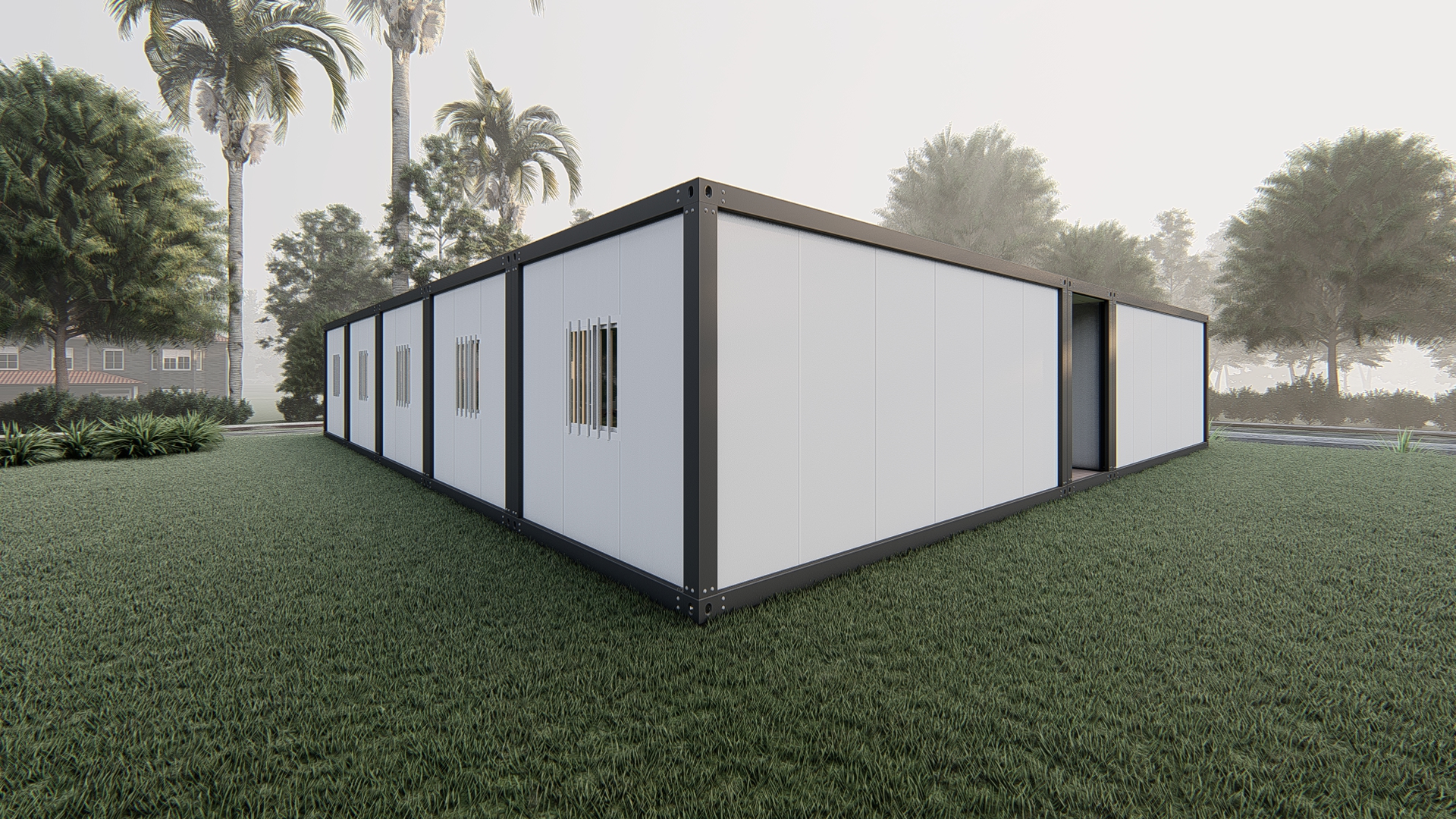
MODU HOUSE builds detachable container houses at its >50,000 m² production sites and exports worldwide in flat-packed bundles. Typical UAE camp configurations are summarised below; every camp is engineered to the client's climate, occupancy and civil-defence requirements.
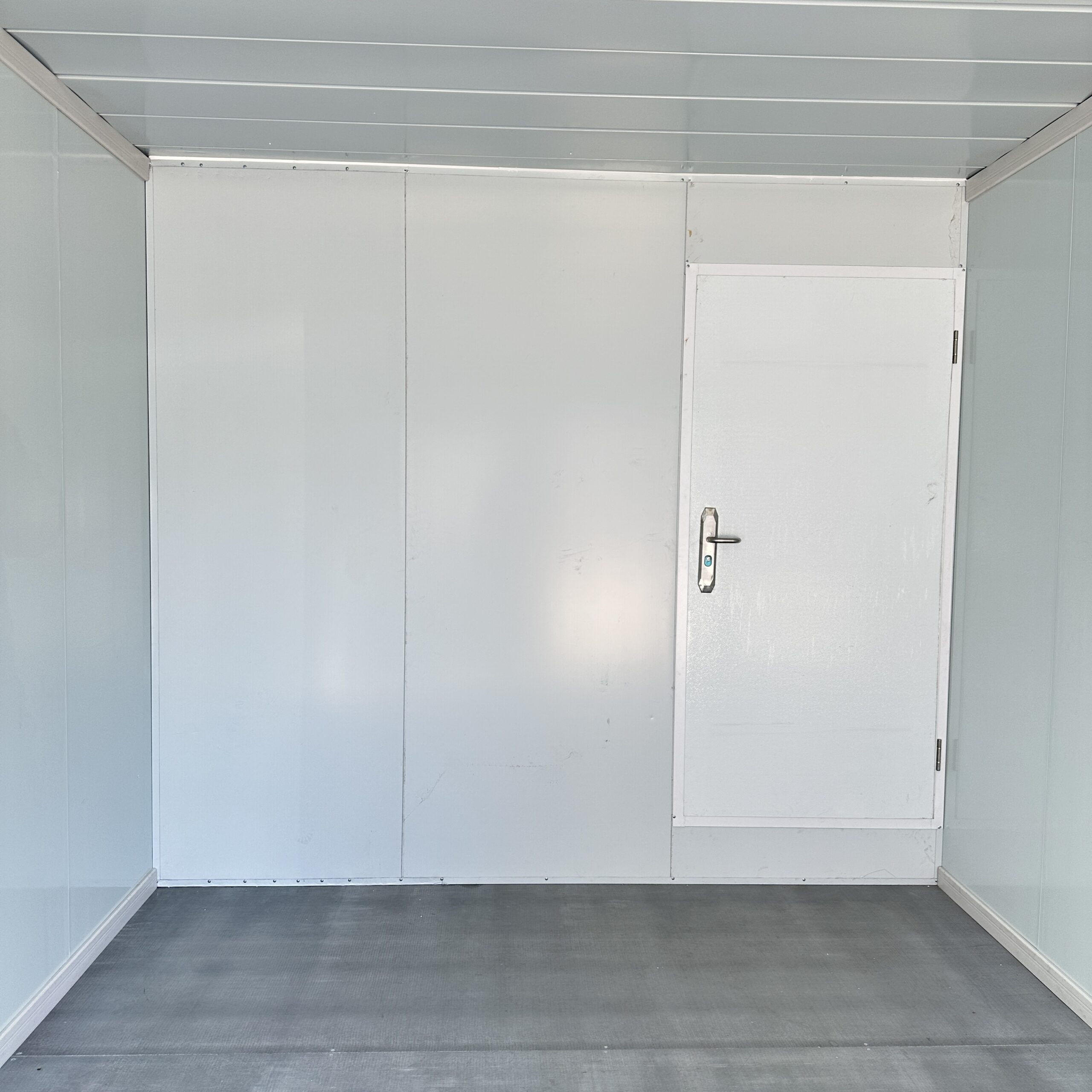
| Item | Typical Specification |
|---|---|
| External size | 5,900 × 3,000 × 2,800 mm (20 ft); two units joinable to 5,900 × 6,000 mm |
| Structure | Galvanised steel frame, bolted corner fittings, 3-storey stackable |
| Wall / roof panels | 50–100 mm EPS / PIR / rock wool sandwich; colour-bonded steel skins |
| Floor | 18 mm cement board on galvanised joists; PVC or ceramic finish |
| Door / window | Steel security door; aluminium sliding or casement window, single or double glazing, mosquito screen |
| Electrical | Pre-wired loom, distribution board with earth leakage protection, LED lighting, 220V/380V to order |
| Sanitary (optional) | En-suite pod: WC, shower, basin; single-point water and waste connection |
| Fire rating | Rock-wool cores and fire-rated assemblies available for civil-defence compliance |
| Assembly | 2–4 hours per module with 3–4 workers; no crane required |
| Lifespan | 15–20 years with standard maintenance; fully relocatable |
For UAE duty, rock-wool cores at 75 mm (density around 120 kg/m³) are the default for dormitories and kitchens, matching the panel class Gulf contractors specify for heat and fire performance.
Engineered for the Gulf: 50°C Heat, Humidity, Sand and Wind
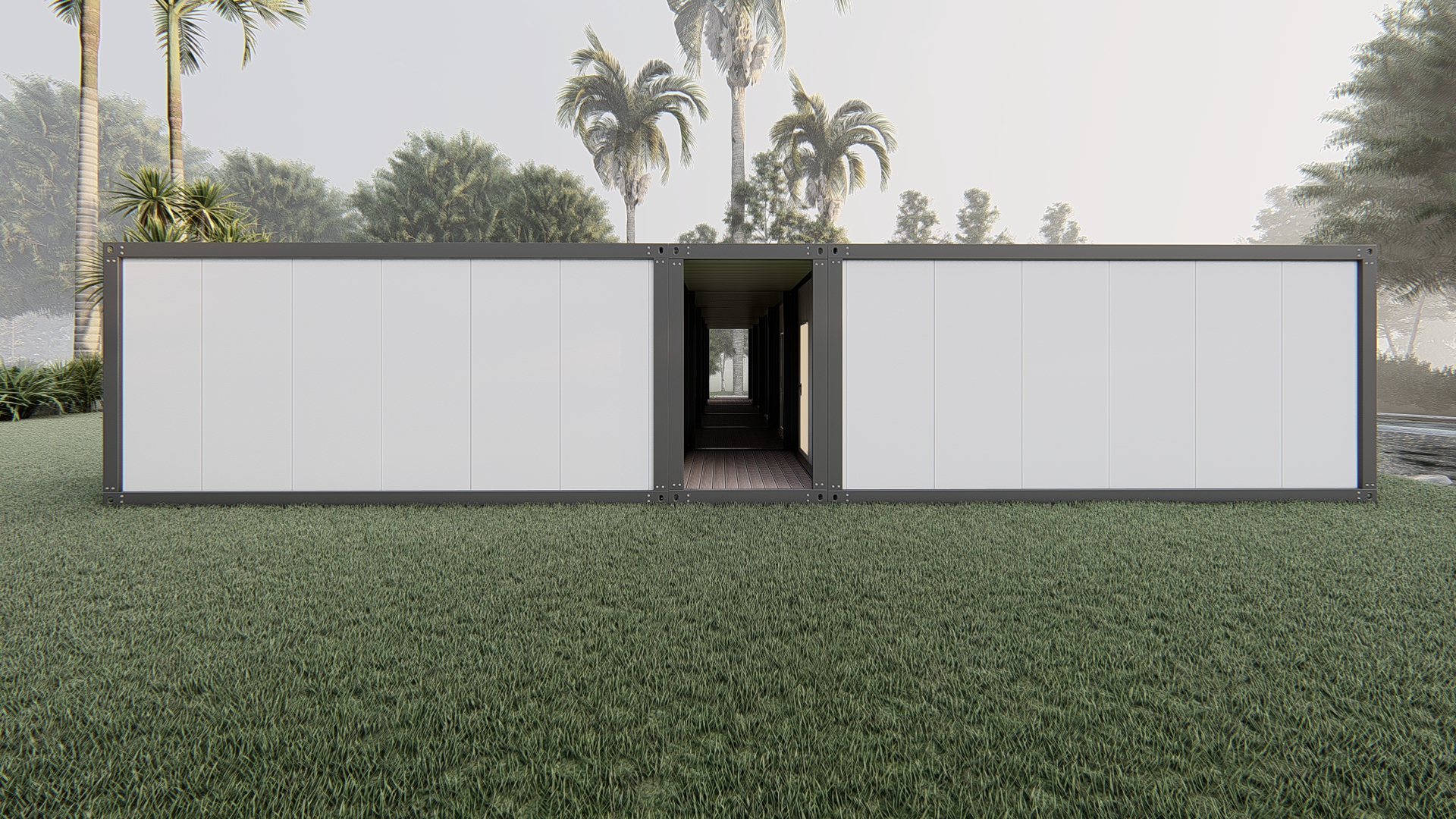
A worker camp in the Emirates lives or dies on environmental performance. MODU HOUSE detachable container houses are specified for exactly this:
- Six-sided insulation envelope. 75–100 mm rock-wool or PIR panels with thickened roof and floor insulation hold interiors habitable through 50°C summers; the same panel class Gulf suppliers use for energy-project camps.
- HVAC-ready services. Circuits sized with spare capacity for split air-conditioners; independent module metering and overload protection.
- Coastal protection. Galvanised frames with marine-grade coating resist the salt-laden air along the Dubai–Abu Dhabi corridor.
- Wind and sand. Steel frames engineered for desert wind loads; sealed panel joints and screened openings keep blowing sand out of living spaces.
- Fire safety. Rock-wool cores and fire-rated assemblies help meet the one-hour fire-rating and civil-defence expectations applied to UAE camp kitchens and communal buildings.
Compliance: Dubai Municipality Standards and Camp Classification
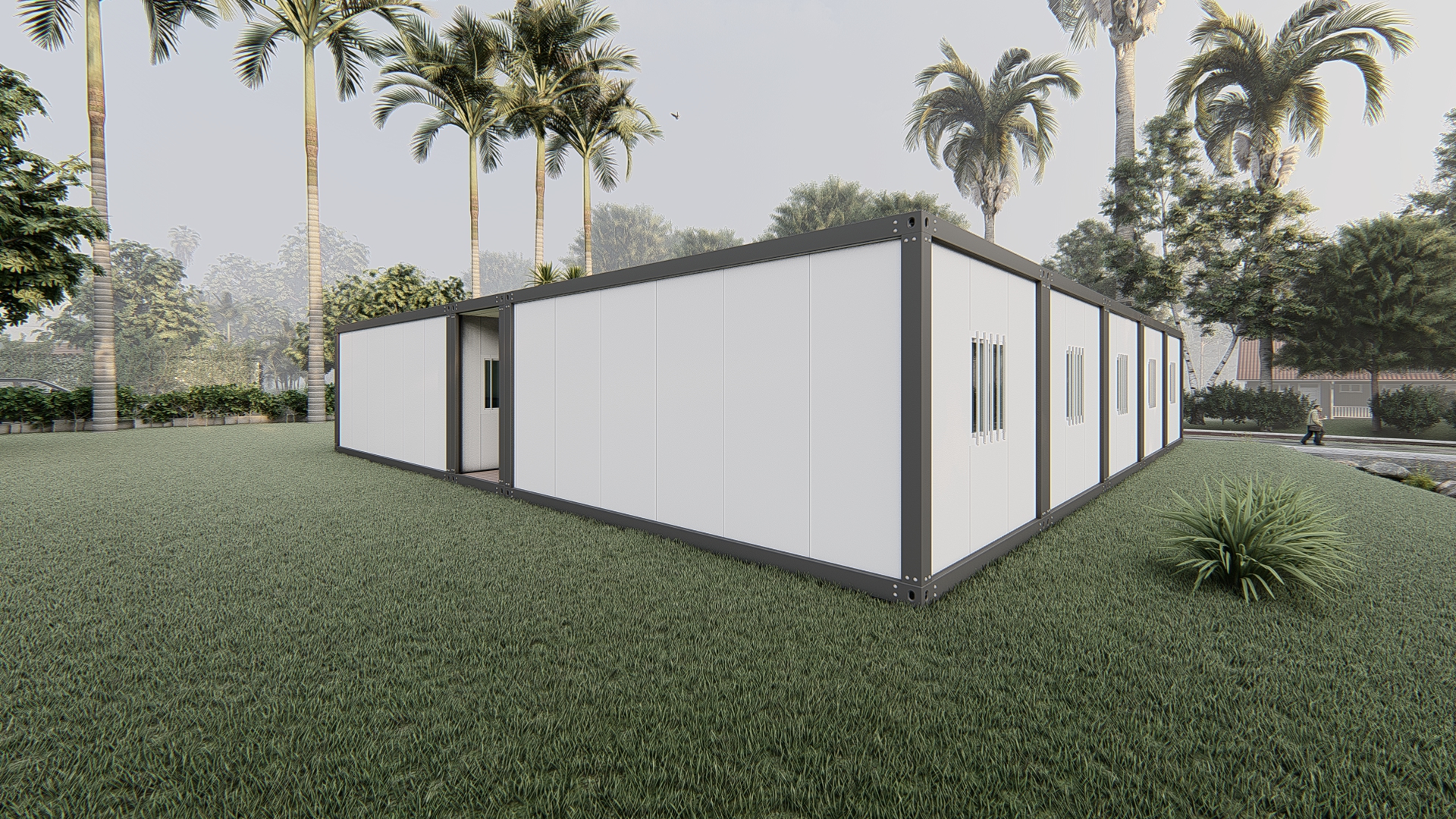
Worker accommodation in the UAE is a compliance surface, not just a comfort item. The 2026 Dubai standards set a 3.7 m² minimum sleeping area per worker and per-person outdoor and recreation provision, with camps graded Silver, Gold and Platinum. MODU HOUSE supports the submission with:
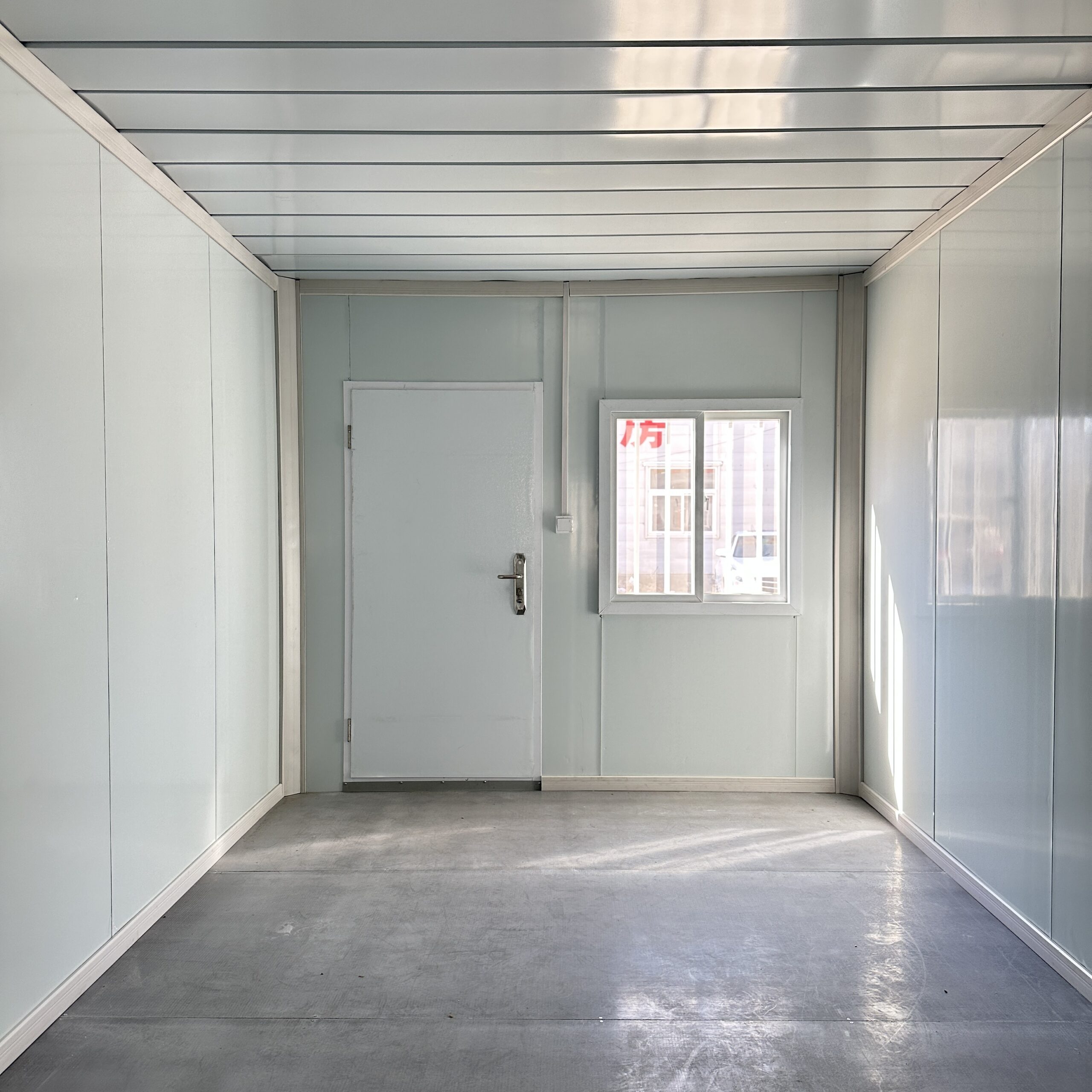
- Material certificates and panel fire-performance data for civil-defence review
- Structural calculations for wind loading and multi-storey stacking
- Electrical schematics with earth-leakage protection
- Layout drawings documenting sleeping-area ratios, ablution provision, escape routes and recreation space
Because modules are manufactured in a controlled factory, evidence of workmanship is consistent across every unit — unlike site-built camps, where quality varies with the crew on the day.
Camp Layouts for UAE Projects
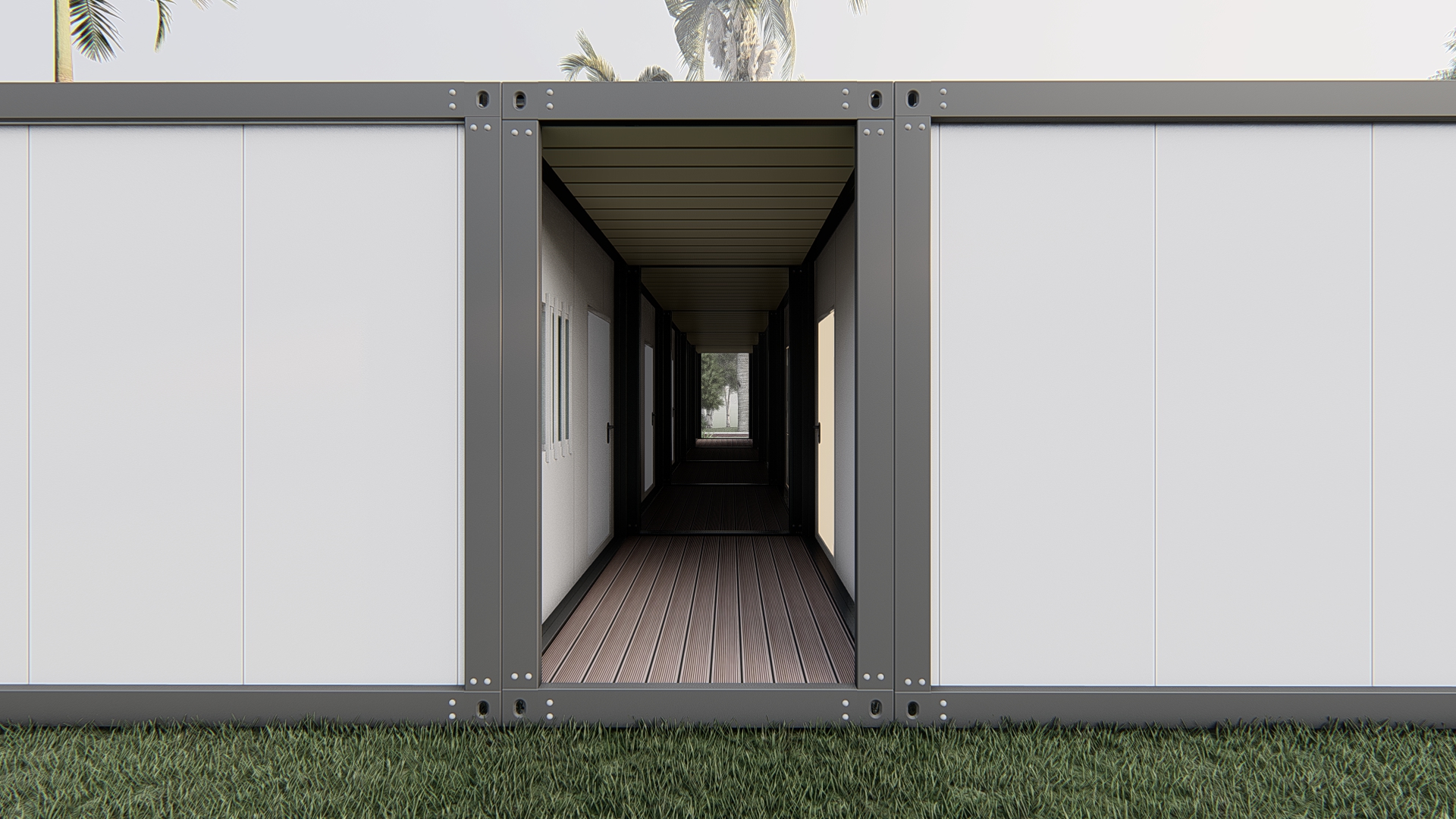
From single-site offices to 1,000-bed energy camps, the module mix scales cleanly. Typical phases are mapped below.
| Camp Phase | Capacity | Typical Module Mix | Reference Benchmark |
|---|---|---|---|
| Site setup / security | 10–40 | Guardhouses, site office, ablution block | Modular offices and guardhouses deployed on UAE oilfield camps |
| Peak construction | 200–1,000+ beds | Stacked dormitory blocks, dining hall, kitchen (fire-rated), clinic, recreation, laundry | 4,000 m² UAE oilfield camp using flat-pack and detachable modules |
| Operations / O&M | 100–500 | Dormitories, offices for engineering teams, ablution and mess facilities | 30 oil-worker dormitories delivered in 200 days via prefabricated steel modules |
| Relocation phase | Reuse | Modules unbolted, flat-packed and trucked or re-shipped to the next site | Reusable container camps with >95% reuse rates cited by Gulf suppliers |
A well-planned layout keeps dormitory blocks downwind of the kitchen, holds ablution ratios near 1 shower and 1 WC per 8 workers, and reserves the per-person outdoor space Dubai's standards require — and because every module is detachable, the camp grows by adding blocks rather than redrawing the master plan.
Cost & Speed: Detachable Camps vs Traditional Construction
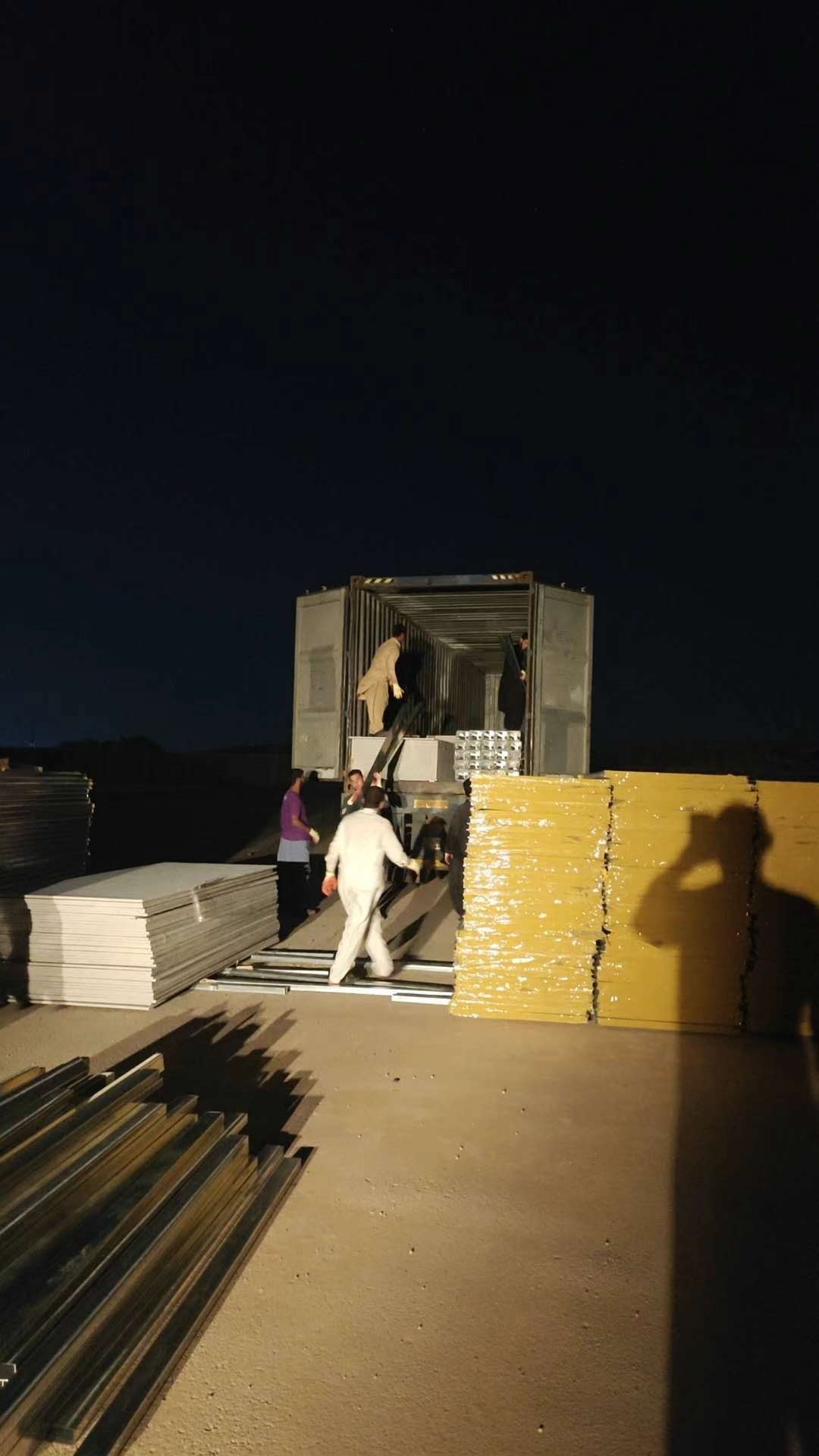
The economics show up in build time, freight and redeployment.
| Factor | Traditional Brick / Block Camp | Detachable Container House Camp |
|---|---|---|
| Delivery timeline | Months; concrete curing slows in summer heat | Production in weeks; camp assembled on site in 2–6 weeks |
| Foundations | Raft slabs, trenching, concrete trades to site | Concrete blocks or adjustable feet; no slab |
| Import freight | n/a (local build) or full-volume shipping | Flat-packed: 6–8 room modules per 40 ft high-cube container |
| On-site workforce | Multiple trades for months | 3–4 general workers per module; 2–4 hours assembly each |
| Relocation / closure | Demolition and rubble removal | Unbolt, flat-pack, truck to next site — asset retains value |
| Compliance evidence | Varies by contractor | Factory certificates, consistent across all units |
For a 300-bed camp, moving from blockwork to modular typically removes months from the accommodation critical path — which, on a Gulf megaproject where each week of delayed ramp-up carries its own cost, usually outweighs the module line item several times over.
Shipping, Assembly and MEP
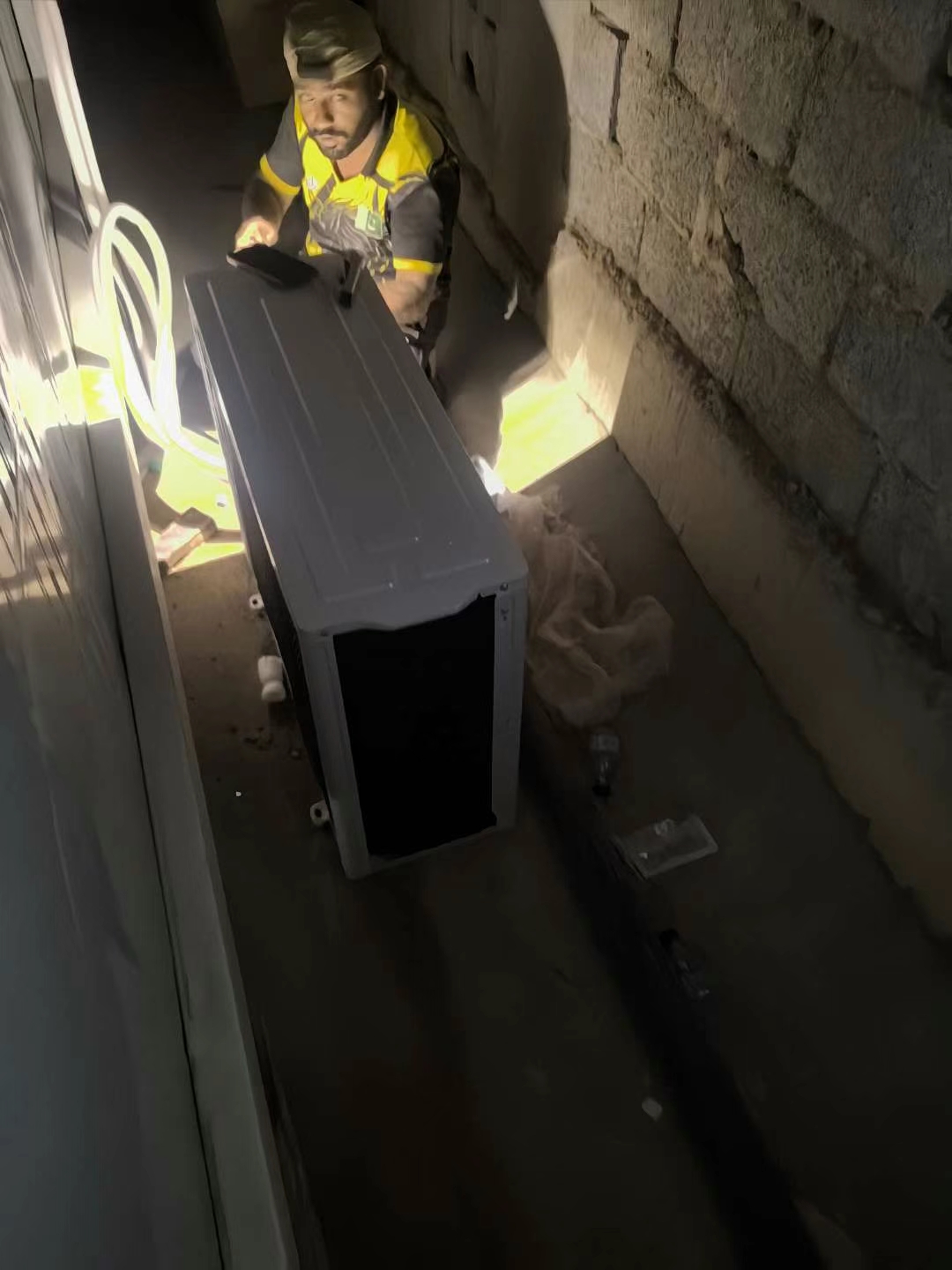
MODU HOUSE exports from its production bases with documentation handled for CIF Jebel Ali. The standard sequence looks like this:
- Week 0–1: Headcount, climate and services confirmation; proforma invoice.
- Week 2–5: Production and pre-assembly checks; modules flat-packed with panels, fasteners and fittings in bundles.
- Week 6–8: Ocean freight to Jebel Ali (roughly 20–30 days transit from Chinese ports), customs clearance and inland transfer.
- Site phase: Level pads, assemble modules at 2–4 hours each, connect MEP, commission — a 150-bed camp is typically live within two to three weeks of the first truck arriving.
Assembly needs no crane and no specialist trades: the frame is lifted by forklift or small mobile crane, panels are carried by hand, and every connection is a bolt. MODU HOUSE supplies step-by-step assembly drawings and video guidance, with engineers available for on-site supervision on larger contracts.
Why Buy From MODU HOUSE
- Factory scale you can audit. More than 50,000 m² across six self-owned production sites, building container houses, expandable homes, apple cabins and fold-out units on the same lines.
- Gulf corridor experience. Regular 40 ft high-cube shipments to the Middle East, with flat-pack loading plans that minimise cost per bed into Jebel Ali.
- Engineering support. Wind-load and stacking calculations, electrical schematics and camp layout drawings supplied as part of the package — ready for civil-defence and municipality review.
- Full camp scope. Dormitories, ablution modules, kitchens, offices, guardhouses, clinics and recreation units from one supplier, one quality standard.
Frequently Asked Questions
Can detachable container houses meet Dubai's 3.7 m² sleeping-area rule?
Yes. MODU HOUSE layouts are drawn around per-worker sleeping-area and per-person outdoor/recreation minimums, and the standard 20 ft module can be specified as single, double or bunk occupancy to hit the required ratio per person.
How do the modules cope with 50°C summers?
With 75–100 mm rock-wool or PIR insulation, thickened roof and floor insulation, double-glazed windows and HVAC-ready electrical sizing, interiors stay habitable through Gulf summer peaks.
What fire rating do the panels provide?
Rock-wool core panels and fire-rated assemblies are available to support the one-hour fire-rating and civil-defence expectations applied to UAE kitchens, mess halls and communal buildings.
How many modules fit in a shipping container?
Detachable modules flat-pack: a 40 ft high-cube container typically carries 6–8 disassembled 20 ft room modules including panels, fasteners and fittings.
Do we need a concrete slab?
No. Modules level onto concrete blocks, sand pads or adjustable feet, keeping site works minimal and the camp genuinely relocatable — useful for project-phased and temporary sites.
What documentation does MODU HOUSE provide for approval?
Material certificates, panel fire data, structural wind and stacking calculations, and electrical schematics — the package authorities expect for civil-defence and municipality compliance.
Conclusion: Compliant Camps, Delivered Faster
The UAE's construction and energy pipeline rewards contractors who can mobilise compliant worker accommodation quickly and scale it with the project. A detachable container house camp meets Dubai's spacing and fire standards, survives the Gulf's heat and wind, and — uniquely — packs down and moves when the work does.
Planning a worker camp in the UAE, Dubai or anywhere in the Gulf? Send MODU HOUSE your headcount, site conditions and timeline — our engineers will return a full camp layout, module specification and CIF Jebel Ali quotation for your review.
recommended for you

Get in touch with us
Our main products including Expandable Container House, Folding Container House, Detachable Container House and etc. All of our products have CE certification. Most of configurations of our houses can be customized according to customers special needs and meet different countries standards.
Mobile/WhatsApp: +86 131 7639 4131
Email:info@mymoduhouse.com
Add: Building 3, No. 9 Nanliu Road, Liuting Subdistrict, Chengyang District, Qingdao City, Shandong Province
Copyright © 2026 MODU HOUSE